
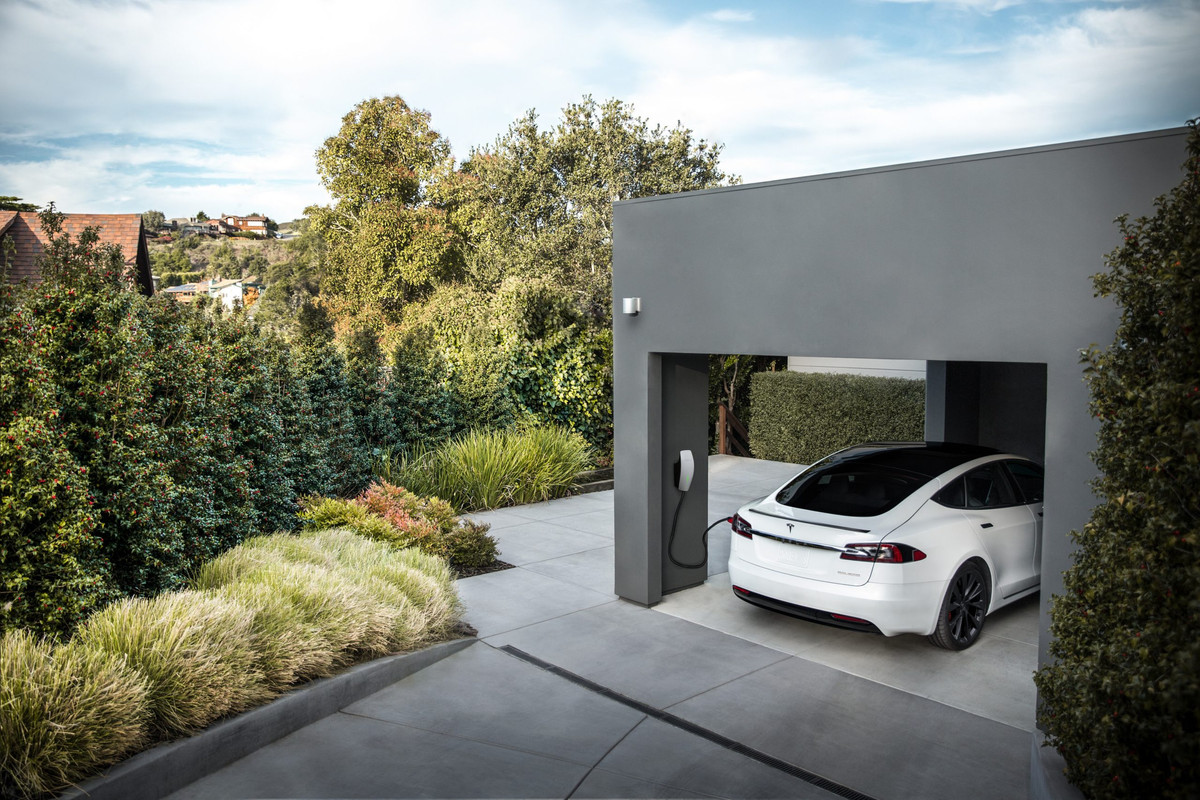
Why Level 2 Charging Matters
The 120V outlet that came with your house delivers about 1.4 kW of power — that's 4–5 miles of range per hour. Your EV's standard 'trickle charger' uses this outlet, and while it technically works, it means a full charge on a 70–100 kWh battery takes 2–3 days. Level 2 charging (240V) changes everything. At 11–19 kW, you're adding 25–40 miles of range per hour — a completely full battery every morning is realistic for most drivers.
- •Level 1 (120V): 4–5 miles/hr — fine for plug-in hybrids, painfully slow for EVs
- •Level 2 (240V): 25–40 miles/hr — overnight charge for any EV battery size
- •Level 2 is installed by a licensed electrician at your home
- •Cost including hardware, labor, and permit: $900–$2,000 in the Bay Area
- •Pays for itself quickly via lower overnight electricity rates vs. public fast charging fees
Step 1: Assess Your Electrical Panel
Before buying a charger, know your electrical panel's capacity. Look for the main breaker at the top of your panel box — it will say 100A, 150A, or 200A. This determines how much load your home can carry simultaneously. For a 50A EV circuit (needed for most modern EVs), you need 50 free amps on your panel. A 200A panel typically handles this easily. A 100A panel may be tight if you have other large loads (electric HVAC, tankless water heater, electric range). If your panel is at or near capacity, you have three options: dynamic power management (DPM), load balancing, or a panel upgrade.
- •200A panel: almost always accommodates a 50A EV circuit without changes
- •100A panel: may need DPM or panel upgrade depending on existing loads
- •150A panel: usually fine with a 40–50A circuit
- •Federal Pacific and Zinsco panels: should be replaced regardless of EV — fire hazard
- •ChargeWizards performs a free panel assessment during every quote visit
Step 2: Choose the Right Charger
Not all Level 2 chargers are created equal. Key specs to compare: amperage (16A–80A), connector type (J1772 for most EVs, NACS for Tesla), smart features, and DPM capability. For most Bay Area homeowners with a 200A panel, a 48A charger (like ChargePoint Home Flex, JuiceBox 48, or Wallbox Pulsar Plus) maxes out their EV's onboard charger. Tesla owners should consider the Tesla Wall Connector for native NACS connectivity. Homes with 100A panels should prioritize DPM-equipped chargers like the Grizzl-E Smart or Emporia.
- •Best for Tesla homes: Tesla Wall Connector ($550–600) — native NACS, app integration
- •Best flexible charger: ChargePoint Home Flex ($600–700) — adjustable, portable, great app
- •Best value with DPM: Grizzl-E Smart ($250–300) — built-in DPM, extremely durable
- •Best smart + DPM combo: Emporia Smart EV Charger ($400–500) — energy monitoring + DPM
- •Premium performance: JuiceBox 48 ($550–650) or Wallbox Pulsar Plus ($450–550)
Step 3: Understanding the Installation Process
A typical Level 2 EV charger installation involves: a site visit to assess the panel and garage layout, pulling the building permit, running conduit from the panel to the charger location, installing a dedicated breaker, mounting and wiring the charger, and scheduling the city inspection. The work itself takes 3–6 hours depending on complexity. Permit approval typically takes 1–2 weeks in Bay Area cities. The inspection is usually a 30-minute visit to verify the work meets code. ChargeWizards handles the entire process — you don't have to call the permit office or schedule the inspector.
- •Day 1: Site visit + quote (free)
- •Week 1–2: Permit processing (we handle this)
- •Install day: 3–6 hours typical installation
- •After install: City inspection scheduled (typically within 1 week)
- •You receive a permit-pulled, inspection-passed, code-compliant installation
Costs: What to Expect in the Bay Area
EV charger installation costs vary based on your home's electrical setup and charger location. Typical Bay Area ranges: Simple garage install (panel nearby, 10–20 ft run): $800–$1,500. Medium complexity (30–50 ft run, subpanel, or outdoor install): $1,500–$3,500. Complex installs (long trenching, panel upgrade, condo/HOA): $3,500–$7,000+. What drives cost: Every home is different. The biggest factors are wire run distance, panel capacity, and whether trenching or electrical upgrades are needed. A 10-ft garage run is a completely different scope than a 130-ft condo install with a subpanel. Federal 30C tax credit covers 30% of installation costs (up to $1,000). Local utility rebates (PCE up to $4,500, BayREN, EV Charge SF up to $5,000) can significantly reduce your out-of-pocket cost. ChargeWizards provides detailed, itemized quotes upfront — you'll know exactly what you're paying for and why before any work begins.
- •Simple attached garage install: $900–$1,300
- •Detached garage with 30–50 ft conduit run: $1,200–$1,800
- •100A panel with DPM charger: $1,200–$2,000
- •Panel upgrade (if needed): add $3,000–$5,000
- •Federal 30C tax credit: 30% of install cost (up to $1,000) — reduces your out-of-pocket
Bay Area Rebates and Incentives
Bay Area homeowners can significantly reduce their installation cost with available incentives. The federal Section 30C Alternative Fuel Vehicle Refueling Property Credit covers 30% of installation costs, up to $1,000 for residential installs (residential 30C expires June 30, 2026). Each Bay Area county has its own Community Choice Aggregator (CCA) rebate program: Peninsula Clean Energy (PCE) ChargeForward in San Mateo County (up to ~$4,500 income-qualified), Silicon Valley Clean Energy (SVCE) for most of Santa Clara County, and CleanPowerSF EVCSF in San Francisco (up to $5,000). Ask ChargeWizards about current rebate stacking — we help you identify and document every incentive you qualify for.
- •Federal Section 30C tax credit: 30% of install cost, up to $1,000 — expires June 30, 2026
- •Peninsula Clean Energy (PCE) ChargeForward: up to ~$4,500 (income-qualified)
- •Silicon Valley Clean Energy (SVCE): see SVCE EV programs
- •CleanPowerSF EVCSF: up to $5,000 (San Francisco)
- •BAAQMD (Bay Area Air Quality Management District): periodic incentive programs
Free Tools from ChargeWizards